
2025年第4期(总436期)目录
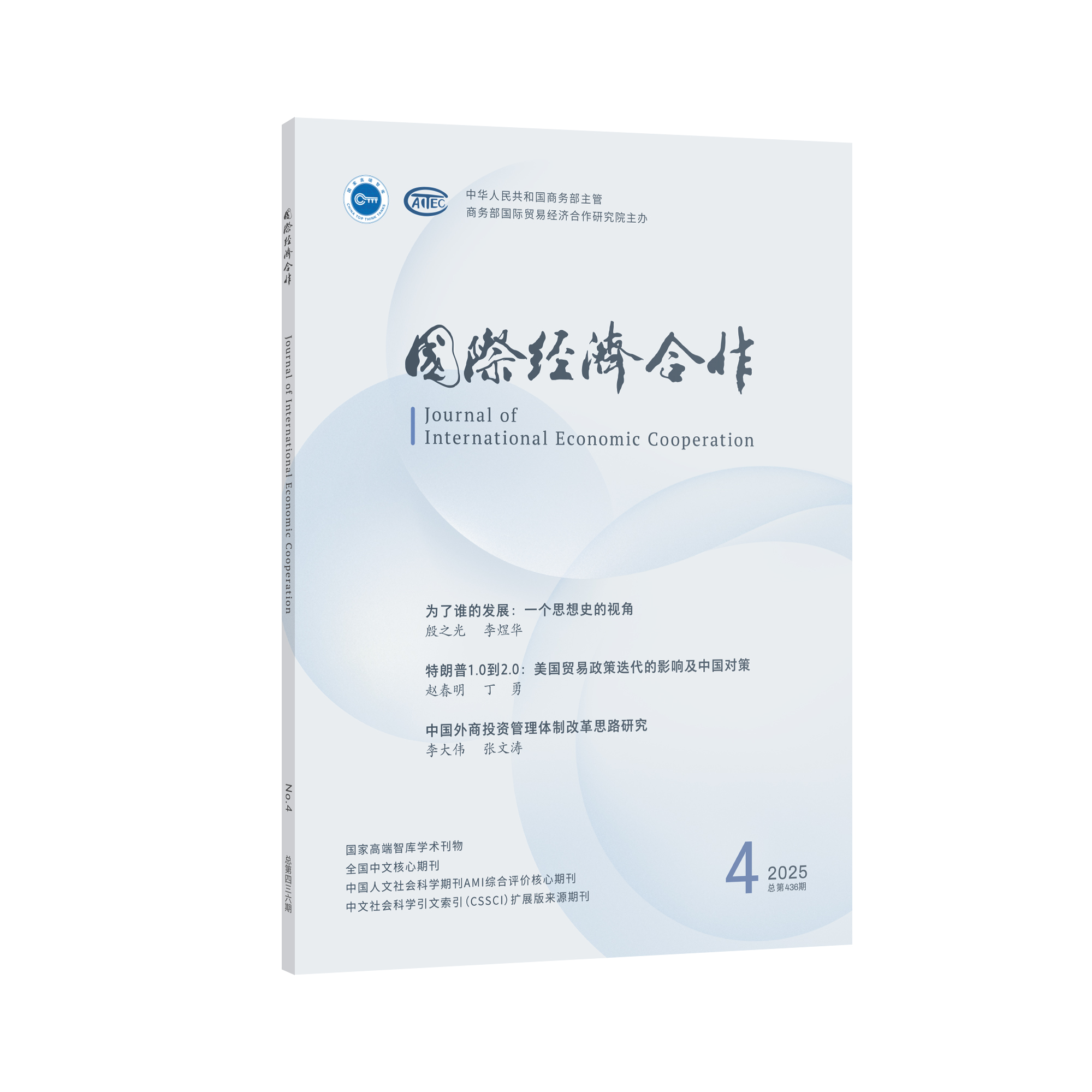
为了谁的发展:一个思想史的视角
殷之光 李煜华
内容提要:本文从思想史的角度切入,讨论西方发展观与中国发展观在认识论与目的论层面上的差异。本文认为,方法论的个人主义与自上而下“济贫”式的认识论是导致西方发展援助在“全球南方”失效的重要原因。在此基础上,本文提出从“全球南方”发展中国家的诉求出发,对发展问题的讨论应当以作为集合名词的“人”为基础,将国家作为担负现代化使命和治理责任的主体,将自主发展能力的培育视为国家发展成败的关键,强调国家发展本身就包含社会发展的目标,国家与社会共生共强,追求发展为国家、社会、人民整体自主赋能的目标。这种赋能式发展最需要坚持的第一性原则是对生产与扩大再生产权利的主张。
关键词:自主发展能力 发展理论 不干涉原则 “全球南方” 中国式现代化
基金项目:国家社会科学基金重大项目“‘干涉与反干涉’视角下发展中国家现代化进程比较研究”(编号:24&ZD030)
作者简介:殷之光系复旦大学国际关系与公共事务学院教授,研究方向为马克思主义政治经济学与政治思想史、国际秩序与国际治理问题;李煜华系复旦大学国际关系与公共事务学院博士研究生,研究方向为数字治理与国际发展。
国际对非峰会的政策取向、机制局限与中国方案
唐丽霞 刘懿锋 赵文杰
内容提要:全球治理格局深刻变革,国际对非峰会数量激增,议题由援助拓展至贸易、投资与能源合作等领域,反映出主办国在非洲事务中的多元利益诉求。西方国家延续历史影响力巩固全球战略地位,美国等国家借助政治干预和贸易投资扩大对非洲的控制,中东国家依托文化纽带与安全合作深化区域影响,“全球南方”国家则强调南南合作,共谋可持续发展。对非峰会普遍面临规则碎片化、邀请受限、组织随意及承诺兑现不足等问题,既体现出国际社会对非洲关注的提升,也揭示了全球结构性竞争对合作机制的深刻影响。虽然对非峰会在推动非洲经济增长与国际地位提升方面发挥了作用,但也在一定程度上加剧了区域不平衡和新旧矛盾。中非合作论坛作为全球最大的对非峰会平台之一,探索出一条务实、可持续的合作发展路径,构建了制度化的合作框架,树立了南南合作的典范,为非洲自主发展提供了有益参考,并为国际峰会提供了对话合作、互惠互利的范式。
关键词:国际对非峰会 中非合作论坛 中国方案 南南合作 全球治理
基金项目:国家社会科学基金重大项目“中国与‘一带一路’国家有效分享减贫经验的模式与策略研究”(编号:21&ZD180)
作者简介:唐丽霞系中国农业大学人文与发展学院教授、博士生导师,中国农业大学国际发展与全球农业学院副院长,研究方向为国际发展、中非合作;刘懿锋系中国农业大学人文与发展学院博士研究生,研究方向为国际发展、农村发展政策;赵文杰系中国农业大学人文与发展学院副教授,研究方向为国际发展。
“发展+市场”复合型三方合作模式何以构建?
——基于新发展合作范式的探索
胡 勇 黎瑞琪
内容提要:面对日益严峻的全球发展情势,传统发展援助模式显得越来越力不从心,强调主体多元与内容交融的新发展合作范式应运而生。在此背景下,有必要统筹谋划三方发展合作与第三方市场合作,构建优势互补、协同增效的“发展+市场”复合型三方合作新模式,促进联合国2030年可持续发展议程与共建“一带一路”高质量发展。就逻辑可能性而言,三方发展合作与第三方市场合作在理念、主体、功能等领域互联互通。就现实可行性而言,三方发展合作与第三方市场合作之间存在“效率型溢出”与“责任型溢出”的互溢效应。通过探索和设计“发展+市场”复合型三方合作模式的实现路径与保障机制,有望进一步整合各方资源,实现发展效应与市场收益的双丰收以及合作伙伴的三方共赢。
关键词:国际发展合作 三方发展合作 第三方市场合作 “一带一路”
基金项目:国家社会科学基金一般项目“西方发展主义话语解构与中国全球发展理论建构研究”(编号:20BGJ041)
作者简介:胡勇系上海对外经贸大学国际组织学院副教授,研究方向为国际发展合作、当代中国外交;黎瑞琪系上海对外经贸大学法学院硕士研究生,研究方向为国际经济法。
特朗普1.0到2.0:美国贸易政策迭代的影响及中国对策
赵春明 丁 勇
内容提要:特朗普执政以来,中美贸易摩擦持续升级,全球经贸格局面临深刻调整。特朗普1.0时期,美国从关税壁垒、技术封锁与产业链重构三重维度对中国实施精准制裁,导致中国经济面临技术断裂、产能重构与范式转型等多重压力,此举也在美国国内埋下通胀隐患。特朗普2.0时期,美国政策进一步升级为供应链“脱钩”、技术标准分化和国际规则体系博弈,这加大了中国经济外部环境的不确定性和全球经济的系统性风险。在此背景下,探究中国政府与企业如何应对美国贸易保护政策迭代及全球产业链重构带来的挑战,具有重要的现实意义。
关键词:特朗普2.0 贸易保护主义 应对策略 中美关系 大国竞争
基金项目:国家社会科学基金重点项目“工业智能化应用对我国贸易高质量发展的影响研究”(编号:22AJL012)
作者简介:赵春明系北京师范大学经济与工商管理学院二级教授、博士生导师,研究方向为世界经济;丁勇系北京师范大学经济与工商管理学院博士研究生,研究方向为国际贸易。
总体国家安全观下中国企业海外利益风险预警及防范路径
王 铮
内容提要:有效保护中国企业海外利益,既是经济发展和国家利益的重要课题,也是国家安全的重要组成部分。新发展格局下,中国企业海外利益拓展在规模、范围和影响上有了新的突破,但也面临贸易战引发的规则重构与联盟围堵等新的结构性风险,从而产生风险预警的客观需求。总体国家安全观为审视企业海外利益风险防范提供了新的理论遵循,强调不同风险之间的关联和演化,重视从事后处置到事前预防的转变,在理念、体系和机制三个层次重塑企业海外利益风险预警防范的发展取向。未来企业海外利益风险防范,需要在统筹发展和安全、人民至上与生命至上理念下,注重风险防控的全局性和系统性,完善海外利益保护的协调体系和法律体系,并建立面向环境不可抗力型、制度距离型、地缘政治型、社会嵌入型和技术主权型等不同风险类型的分类预警体系,更全面系统、深入有效地维护中国企业的海外利益。
关键词:总体国家安全观 海外利益保护 中国企业 风险预警 新发展格局
基金项目:研究阐释党的二十届三中全会精神国家社会科学基金重大专项“深入推进中国式现代化面临的复杂环境和风险挑战研究”(编号:24ZDA005)
作者简介:王铮系中共中央党校(国家行政学院)应急管理研究院讲师,研究方向为国家安全与应急治理。
中国外商投资管理体制改革思路研究
李大伟 张文涛
内容提要:外资是参与中国式现代化建设的重要力量,深化外商投资管理体制改革是当前和今后一个时期进一步加大吸引外资力度的重要着力点。当前中国利用外资的综合优势依然明显,未来仍将是全球跨国企业主要投资目的地之一。随着外部环境和中国自身比较优势发生深刻变化,中国利用外资面临美欧国家遏制打压和发展中国家引资竞争加剧、传统要素成本上升加快等现实挑战。需客观看待现阶段外商投资管理体制改革取得的成绩和存在的问题,以进一步扩大外资市场准入、强化外资企业准入后国民待遇、优化外资企业促进政策体系、积极推广应用事中事后监管为重点,制定外商投资管理体制改革的具体方案。
关键词:外商投资 管理体制 事中事后监管 外资促进 负面清单
基金项目:国家社会科学基金青年项目“外部援助、国家能力与非洲国家发展和治理现代化研究”(编号:23CJY081)
作者简介:李大伟系中国社会科学院信息情报研究院副院长、研究员,研究方向为国际经济合作、外资管理体制机制、产业经济等;张文涛系中国宏观经济研究院对外经济研究所助理研究员,研究方向为对外援助、对外投资、国际经贸规则。
数字经济对拉美产业结构的影响及中拉数字合作建议
张 勇 王文靖
内容提要:数字经济是世界经济发展的重要方向,也是各国产业结构优化和升级的重要引擎。拉美地区的产业结构存在初级产品专门化、“去工业化”和非正规就业占比高三大特征,这些因素增加了其面对外部冲击的脆弱性风险。通过提高生产效率、强化技术创新、催生新商业模式和促进外贸增长等机制,数字经济对拉美地区的产业结构升级产生了显著的积极影响。数字经济的发展有望助力拉美地区产业结构向高级化和合理化方向转型。鉴于此,在“一带一路”倡议下,中国和拉美地区加强数字经济合作,推动拉美地区产业结构升级具有重要意义。中拉数字经济合作包括加强数字基础设施建设合作、开展以智能制造为代表的国际产能合作、加快科技创新合作以及积极开展全球数字治理合作。
关键词:数字经济 拉美地区 产业结构 “一带一路” 中拉合作
基金项目:国家社会科学基金一般项目“内生及外源性危机对拉美国家的影响及其应对机制研究”(编号:20BGJ073)、中国社会科学院学科建设“登峰战略”资助计划优势学科(编号:DF2023YS47)
作者简介:张勇系中国社会科学院拉丁美洲研究所研究员,研究方向为拉丁美洲经济、发展模式转型、中拉经贸关系;王文靖系中国人民大学经济学院博士研究生,研究方向为数字经济、中小企业发展。
绿色技术创新对中国制造业出口韧性的影响:
基于“一带一路”共建国家的证据
李冬新 陈 浩
内容提要:本文通过构建年份—产业—国家的三维面板数据,选取44个“一带一路”共建国家为样本,深入探讨绿色技术创新对中国制造业出口韧性的影响。结果表明,绿色技术创新显著增强了中国制造业对“一带一路”共建国家的出口韧性,这一结论在经过多轮稳健性检验后依然稳固。具体而言,绿色技术创新主要通过提升生产效率、提升出口技术复杂度和降低贸易壁垒三个途径发挥作用。绿色技术创新的影响在不同污染程度的制造业、不同发展阶段的国家以及受金融危机影响程度不同的国家中表现出异质性。本文不仅为理解绿色技术创新如何提升中国制造业出口韧性提供了理论框架和实证支持,而且对制定相关政策具有启示作用。
关键词:绿色技术创新 出口韧性 “一带一路” 制造业
基金项目:国家社会科学基金一般项目“‘一带一路’背景下东亚新型经济合作模式构建研究”(编号:18BGJ001)、山东大学(威海)青年学者未来计划项目“新形势下东亚新型经济合作模式构建研究”(编号:20820201007)
作者简介:李冬新系山东大学东北亚学院教授、国际政治与经济系主任,中日韩思想库网络研究基地(威海)主任,研究方向为区域经济合作、国际经济治理、绿色经济与可持续发展等;陈浩系山东大学东北亚学院科研助理,研究方向为“一带一路”、国际经济治理。
Development for Whom: Intellectual History Perspective
Yin Zhiguang Li Yuhua
Abstract: This study discusses the epistemological and teleological differences between Western and Chinese development concepts from an intellectual history perspective. It argues that methodological individualism and a top-down and “poor relief” type of epistemology are key reasons behind the failure of Western development aid in the Global South. Building upon this foundation, the study proposes that discussions on development should be grounded in the collective concept of the people, responding to the demands of developing countries in the Global South. It emphasizes positioning the state as the primary agent responsible for moderni-
zation and governance, viewing the cultivation of the ability of independent development as the key to national development success. The study underscores that national development intrinsically integrates social development goals, calling for synergistic reinforcement of the state and society. The ultimate aim is to empower the state, society, and people as a whole toward independent development. The primary principle of such empowerment-driven development lies in asserting the right to production and expanded reproduction.
Keywords: ability of independent development, development theory, principle of non-intervention, Global South, Chinese modernization
International Summits on Africa: Policy Orientation, Mechanism Limitations
and Chinese Approaches
Tang Lixia Liu Yifeng Zhao Wenjie
Abstract: Amid profound transformations in the global governance landscape, the number of international summits on Africa has surged, with agendas expanding from aid to trade, investment, and energy cooperation. This proliferation reflects the diversified demands of the summit sponsors in African affairs. Western countries seek to consolidate their strategic primacy by leveraging historical ties. The US and like-minded partners combine political intervention with trade investment to extend their control over Africa. Middle Eastern countries deepen regional reach through cultural ties and security partnerships, whereas the Global South actors foreground South-South cooperation and shared pathways to sustainable development. Summits on Africa generally face problems such as fragmented rules, selective invitations, ad hoc institutional design and insufficient fulfillment of commitments. These issues not only reflect the increased attention of the international community to Africa but also reveal the profound impact of global structural competition on cooperation mechanisms. Although these summits have contributed to Africa’s economic growth and international visibility, they have simultaneously intensified intra-regional disparities and generated new frictions alongside lingering ones. The Forum on China-Africa Cooperation, as one of the world’s most extensive Africa-oriented summit platforms, has pioneered a pragmatic and sustainable path for cooperative development, institutionalized the cooperation framework, and exemplified South-South cooperation, offering instructive insights into Africa’s independent development and a model of dialogue, cooperation, and mutual benefit for international summits.
Keywords: international summits on Africa, Forum on China-Africa Cooperation, Chinese approach, South-South cooperation, global governance
Building “Development + Market” Complex Triangular Cooperation Model
From Perspective of New Paradigm of Development Cooperation
Hu Yong Li Ruiqi
Abstract: Faced with the severe global development landscape, traditional development assistance models have become increasingly inadequate. Consequently, a new paradigm of development cooperation emphasizing multi-stakeholder participation and integrated approaches has emerged. Against this backdrop, it is of great significance to coordinate triangular development cooperation and third-party market cooperation, thereby constructing a new “development + market” complex triangular cooperation model that leverages complementary strengths and enhances synergistic effects. Such an approach will more effectively advance the implementation of the UN 2030 Agenda for Sustainable Development and the high-quality development of the Belt and Road Initiative. In terms of logical possibility, triangular development cooperation and third-party market cooperation are interconnected in their principles, actors, and functions. From a realistic feasibility perspective, these two forms of cooperation exhibit a mutual spillover effect, efficiency-driven spillover and responsibility-driven spillover. By exploring and designing implementation pathways and safeguard mechanisms for the “development + market” complex triangular cooperation model, it is possible to further integrate resources from all parties, achieving a dual harvest of development impact and market returns, as well as a triple win for all partners involved.
Keywords: international development cooperation, triangular development cooperation, third-party market cooperation, Belt and Road Initiative
From Trump 1.0 to Trump 2.0: Impact of Evolution of US Trade Policies
and China’s Countermeasures
Zhao Chunming Ding Yong
Abstract: Since Donald Trump took office, the trade friction between China and the US has continued to escalate, and the global economic and trade landscape is undergoing profound adjustments. During the Trump 1.0 era, the US imposed precise sanctions on China across three dimensions: tariff barriers, technological blockade, and industrial chain restructuring, which exert multiple pressures on the Chinese economy, including technological disruption, production capacity restructuring, and paradigm transformation. This move also planted the seeds of inflation in the US domestic market. In the Trump 2.0 era, the US strategic approach has been further upgraded to supply chain decoupling, technological standard differentiation, and gaming of the international rule system, exacerbating the uncertainty in China’s external economic environment as well as the systemic risk of the global economy. Against this backdrop, exploring how the Chinese government and enterprises respond to the challenges posed by Trump’s evolving protectionist policies and the restructuring of global industrial chains holds significant practical significance.
Keywords: Trump 2.0, trade protectionism, coping strategies, China-US relations, great power competition
Paths of Risk Early Warning and Prevention of Chinese Enterprises’ Overseas Interests Under Holistic Approach to National Security
Wang Zheng
Abstract: Effectively protecting Chinese enterprises’ overseas interests is not only an important subject of economic development and national interests, but also a vital part of national security. Under the new development pattern, the expansion of Chinese enterprises’ overseas interests has made breakthroughs in scale, scope, and influence, but it also faces new structural risks, such as the restructuring of rules and alliance containment caused by trade wars, resulting in demands for risk early warning. The holistic approach to national security provides a new theoretical basis for examining the risk prevention of enterprises’ overseas interests. It emphasizes the correlations and evolution of different risks, prioritizes the transformation from post-event response to pre-event prevention, and reshapes the development orientation of risk early warning and prevention of enterprises’ overseas interests at the three levels of concept, system, and mechanism. In order to prevent overseas interest risks facing the future, enterprises, by adhering to the principles of balancing development and security, as well as putting people first and valuing people’s lives most, need to pay attention to the overall and systematic nature of risk prevention and control. Efforts should focus on improving the coordination and legal systems for protecting overseas interests and developing a categorized early warning system tailored to various types of risks, including environmental force majeure, institutional distance, geopolitical competition, social embeddedness, and technological sovereignty, so as to more comprehensively, systematically, deeply and effectively safeguard Chinese enterprises’ overseas interests.
Keywords: holistic approach to national security, overseas interest protection, Chinese enterprises, risk early warning, new development pattern
Reform Thoughts of China’s Foreign Investment Management System
Li Dawei Zhang Wentao
Abstract: Foreign investment is an important force to participate in China’s modernization drive, and deepening the reform of foreign investment management system is a priority to further attract foreign investment at present and in the future. At present, China’s comprehensive advantages in utilizing foreign capital are still obvious, and China will remain one of the major investment destinations for global multinational corporations in the future. However, with profound transformations in the external environment and China’s comparative advantages, China is confronted with practical challenges in utilizing foreign capital, including containment and suppression by the US and European countries, intensified investment attraction competition from other developing countries, and a rapid increase in costs of traditional elements. Thus, it is necessary to objectively assess the achievements and existing problems in the current reform of foreign investment management system, and formulate specific plans for the reform with an emphasis on further expanding the market access for foreign investment, strengthening the post-establishment national treatment for foreign-funded enterprises, optimizing the policy promotion system of foreign-funded enterprises, and actively advancing the implementation of mid- and post-event supervision.
Keywords: foreign investment, management system, mid- and post-event supervision, foreign investment promotion, negative list
Impact of Digital Economy on Industrial Structure of Latin America and Suggestions
for China-Latin America Digital Cooperation
Zhang Yong Wang Wenjing
Abstract: Digital economy represents a significant direction for global economic development and serves as a crucial engine for the optimization and upgrading of national industrial structures. The industrial structure of Latin America is characterized by specialization in primary products, de-industrialization, and a high share of informal employment, all of which increase its vulnerability to external shocks. The digital economy, through mechanisms such as enhancing production efficiency, strengthening technological innovation, fostering new business models, and promoting foreign trade growth, exerts a positive influence on the upgrading of the industrial structure of Latin America. The development of the digital economy is expected to facilitate the transformation of the industrial structure of Latin America toward sophistication and rationalization. In light of this, strengthening digital economy cooperation between China and Latin America under the Belt and Road Initiative, and thereby promoting the upgrading of the industrial structure of Latin America, is of significant importance. The areas of cooperation include strengthening cooperation in digital infrastructure construction, carrying out international production capacity cooperation represented by smart manufacturing, accelerating scientific and technological innovation cooperation, and actively advancing cooperation in global digital governance.
Keywords: digital economy, Latin America, industrial structure, Belt and Road Initiative, China-Latin America cooperation
Impact of Green Technological Innovation on Export Resilience of China’s
Manufacturing Industry: Evidence From BRI Partner Countries
Li Dongxin Chen Hao
Abstract: By constructing a three-dimensional panel dataset of year, industry and country, and using a sample of 44 Belt and Road Initiative (BRI) partner countries, this paper deeply explores the impact of green technological innovation on the export resilience of China’s manufacturing industry. The research results show that green technological innovation significantly enhances the export resilience of China’s manufacturing industry to BRI partner countries, and this conclusion remains valid after robustness tests. Specifically, green technological innovation operates through three channels: improving production efficiency, enhancing export technological sophistication, and reducing trade barriers. In addition, the impact of green technological innovation shows heterogeneity in manufacturing industries with different pollution levels, countries at different development stages, and countries experiencing differential impacts from financial crises. This paper not only provides a theoretical framework and empirical support for understanding how green technological innovation enhances the export resilience of China’s manufacturing industry but also offers important implications for formulating relevant policies.
Keywords: green technological innovation, export resilience, Belt and Road Initiative, manufacturing industry